

Scientists at the University of Zurich have developed an innovative neuronal culture model to shed light on the complex mechanisms underlying neurodegeneration. Their research identified misbehaving proteins as promising therapeutic targets in the treatment of amyotrophic lateral sclerosis (ALS) and frontotemporal dementia (FTD).
Neurodegenerative diseases destroy some of the neurons in the brain, resulting in different symptoms depending on the area of the brain affected. Amyotrophic lateral sclerosis (ALS) causes neurons in the motor cortex and spinal cord to degenerate, causing paralysis. Frontotemporal dementia (FTD), on the other hand, affects neurons in parts of the brain involved in cognition, language, and personality.
Both ALS and FTD are relentlessly progressive diseases, and there are still no effective treatments. As the population ages, the prevalence of age-related neurodegenerative diseases such as ALS and FTD is expected to increase.
Despite the identification of abnormal accumulation of a protein called TDP-43 in neurons of the central nervous system as a common factor in the majority of ALS and about half of FTD patients, the underlying cellular mechanisms that cause neurodegeneration remain unclear. remains largely unknown.
Flexibility, durability, and reproducibility: the ideal cell culture model for ALS and FTD research
In their study, first author Marian Hruska-Procan and corresponding author Magdalini Polmenidou from the Department of Quantitative Biomedical Sciences at the University of Zurich developed a new neuronal cell culture model that reproduces the abnormal behavior of TDP-43 in neurons. Using this model, they found increased toxicity of the protein NPTX2, suggesting it to be a potential therapeutic target for ALS and FTD.
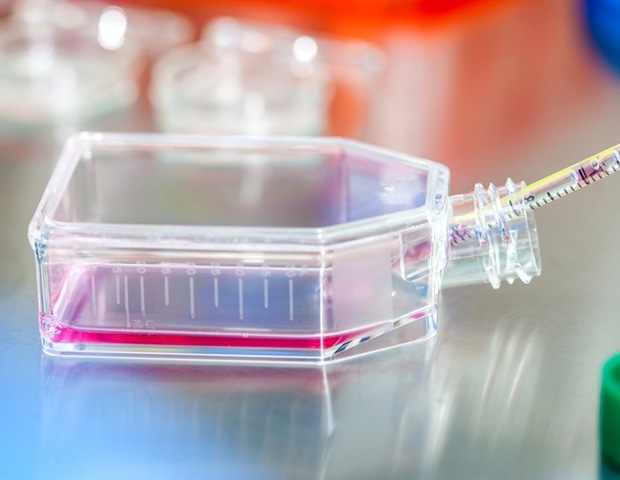
To mimic neurodegeneration, Marian Hruska-Plochan developed a new cell culture model called “iNets” derived from human induced pluripotent stem cells. Derived from skin cells and reprogrammed in the laboratory to a very early undifferentiated stage, these cells serve as a source for developing many different desired cell types. iNets are networks of interconnected neurons and their supporting cells that grow in multiple layers within a dish.
This culture lasted for a very long time, up to a year, and was easily replicated. +
The aging robustness of iNet allows us to perform experiments that would not otherwise be possible. The flexibility of the model also makes it suitable for a wide range of experimental methods. ”
Marian Hruska-Prokan, first author
As a case in point, iNets cell culture provided an ideal model to investigate the progression from TDP-43 dysfunction to neurodegeneration.
How protein dysfunction causes neurodegeneration
Using the iNets model, researchers identified toxic accumulation of NPTX2, a protein normally secreted by neurons across synapses, as the missing link between TDP-43 malfunction and neuron death. . To test their hypothesis, they examined brain tissue from deceased ALS and FTD patients and found that NPTX2 did accumulate in cells containing abnormal TDP-43 in these patients as well. This means that the iNets culture model accurately predicted the pathology of her ALS and FTD patients.
In additional experiments in the iNets model, the researchers tested whether NPTX2 could be a target for drug design to treat ALS and FTD. The research team designed a setup that reduced levels of NPTX2 while neurons suffered from malfunctioning TDP-43. They found that keeping NPTX2 levels low suppressed neurodegeneration in iNets neurons. Therefore, drugs that reduce the amount of the protein NPTX2 have potential as a therapeutic strategy to halt neurodegeneration in ALS and FTD patients.
Magdalini Polmenidou has high hopes for this discovery. “While we still have a long way to go before we can make this available to patients, the discovery of NPTX2 gives us a clear perspective towards developing treatments that attack the core of the disease,” she said. . “Together with two additional targets recently identified by other research teams, we believe that anti-NPTX2 drugs may emerge as important components of combination therapy for ALS and FTD in the future,” she added. Ta.
sauce:
Reference magazines:
Hruska Prokan, M., other. (2024). Human neural network models reveal NPTX2 pathology in ALS and FTLD. Nature. doi.org/10.1038/s41586-024-07042-7.