

1
If a disaster occurs between now and the party convention,
back to menu
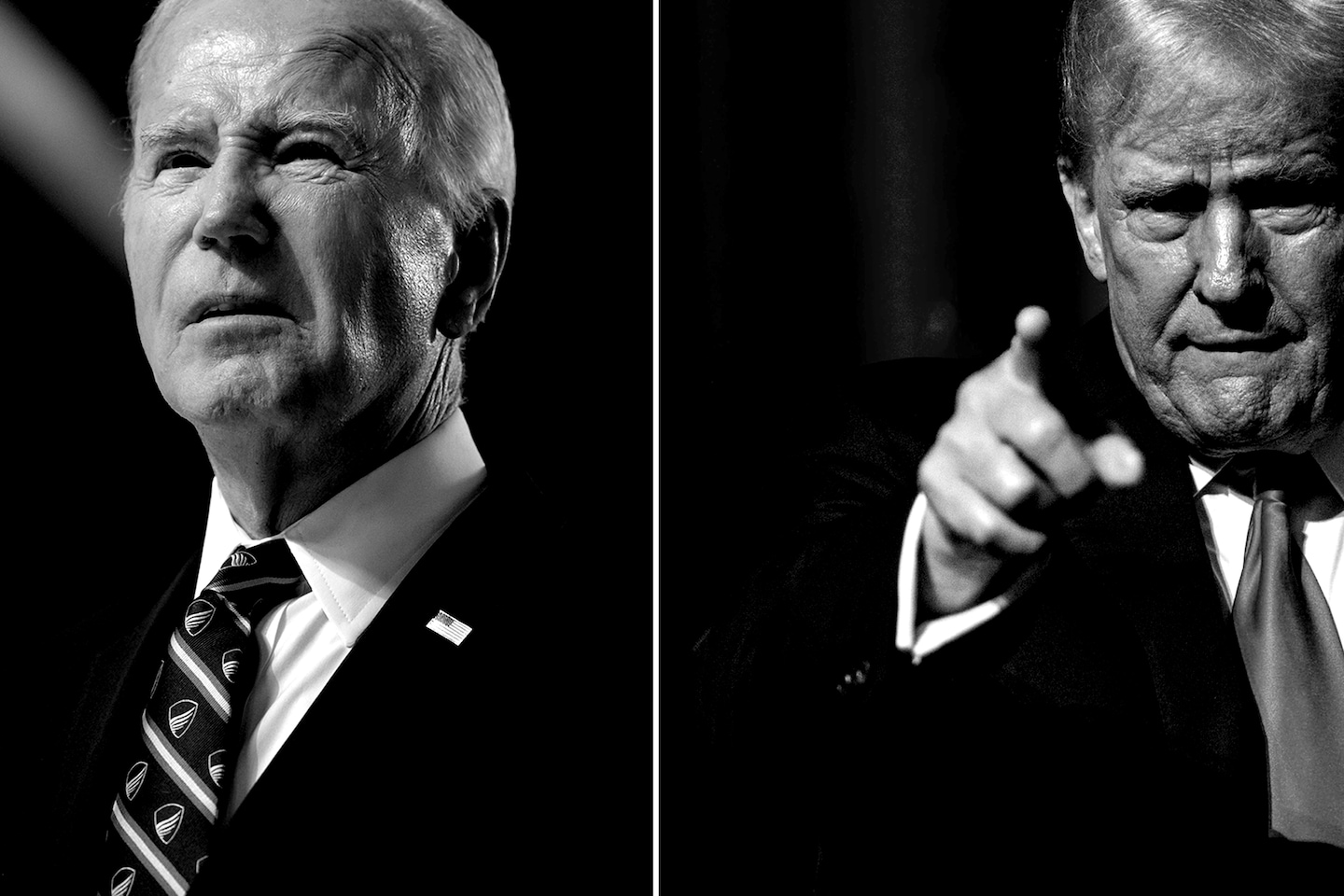
Looking at the current situation, both Mr. Biden and Mr. Trump are likely to have enough delegates to claim their respective nominations by mid-March. But it won’t become official until both parties meet for their conventions this summer — starting July 15 in Milwaukee for Republicans and Chicago starting Aug. 19 for Democrats.
So what happens when the supposed nominee doesn’t make it that far, whether by choice or not? Let’s start with history. On March 31, 1968, then-President Lyndon B. Johnson made the shocking announcement that he would not seek or accept his party’s next nomination. At the time, only 14 states and the District of Columbia held primaries that gave ordinary voters a say in who the candidates were. In other states, party bosses such as mayors, governors, district leaders, and local chairmen controlled the levers. These local party officials engineered Vice President Hubert Humphrey to win the Democratic Party’s nomination despite never appearing in the primary.
The unrest of 1968, when violent clashes between police and anti-war demonstrators broke out in the streets outside the Democratic convention hall in Chicago, sparked a movement to bring the nomination process to the public from the back rooms. Republicans similarly implemented reforms for their own reasons, most notably to increase public interest and involvement. By 1972, the modern system of state primaries and caucuses was nearly complete.
So were the rules for managing situations that could disrupt the process. But we must also remember that each party begins by voting on its convention rules. This means that all these procedures can be ignored in the event of a crisis.
The number of Republican delegates is approximately 2,400, and the number of Democratic delegates is approximately 4,000. “These people could be teachers, trade unionists, evangelical Christians, or right-to-life activists. What they all have in common, even if it is not publicly known, is their to some degree, it is acting on behalf of a political party,” writes Elaine Kamarck, director of the Center for Effective Public Management at the Brookings Institution and author of “Primary Politics.” ”, the authoritative guide to how the nomination process works.
Most of them come to their conventions pledging to support a particular candidate, but current rules for both parties say that convention delegates who pledge to someone who has decided not to run become free agents. . Thus begins a frenzied courtship between the representatives of the winning group.
If Trump or Biden withdraw, other candidates will seize the opportunity to jump into the race. If Biden declines, for example, Vice President Harris will be asked to give California Gov. Gavin Newsom (who Kamarck said is already “running the best proxy campaign campaign I’ve ever seen”) ), it is easy to imagine that he would immediately declare his candidacy. ) and perhaps other rising stars, such as Michigan Gov. Gretchen Whitmer or Illinois Gov. J.B. Pritzker.
As unenthusiastic delegates ponder their options, unrelated states such as Pennsylvania, where primaries are held later in the calendar, are a key gauge of voter sentiment that can guide delegates. Dew. As such, the Secretary of State may consider proposing a new filing deadline or even rescheduling the primary election to allow late entrants to compete. They have precedent for doing so. In 2020, 16 states adjusted their dates, some even multiple times, due to the coronavirus pandemic.
“It will be a tournament in which the outcome will not be known in advance. In other words, it will be an open-ended event, like the nominating conventions held from 1831 to 1968,” Kamarck wrote. There is.
What happened back then wasn’t necessarily a good thing. The 1912 Republican convention saw former President Theodore Roosevelt attempt to steal the nomination from his hand-picked successor, William Howard Taft, claiming that some delegates had been fraudulently seated. It was a scuffle. But the high point of the turmoil was the 1924 Democratic convention, when it took 103 votes to select West Virginia’s dark horse, John W. Davis, as the presidential nominee.
Not since the epic 1976 Republican primary between Gerald Ford and Ronald Reagan have delegates arrived at a convention with the nomination at stake. The first vote on the matter was in Ford’s favor.
But all that was before modern forces like social media, big money, and high-tech disinformation changed the nature of politics and brought in new players. Republican lawyer Benjamin Ginsburg, a leading Republican expert on election law, said that because it’s not clear who will play the role of intermediary in today’s politics, what could happen today is an old-fashioned “intermediary” He said it was not accurate to call it a practice, calling the shots the way state chairs, district leaders and senior elected officials have done in the past. At the moment, the intentions of establishment figures are of no consequence to the populists of either party, and any recent efforts by traditional forces to instill order may only bring further criticism.
President Trump’s death will create a particularly large vacuum in the Republican Party, whose most recent platform simply stipulates that it will support whatever President Trump wants to do. As we have already seen in the primaries, when candidates like Florida Governor Ron DeSantis spectacularly fail in their attempts to portray themselves as the 2.0 version of the original MAGA, what he leaves behind is There is no obvious successor to bring order and authority. . “Are the delegates going to listen to Eric Trump?” Ginsburg asks. “i don’t think so.”