

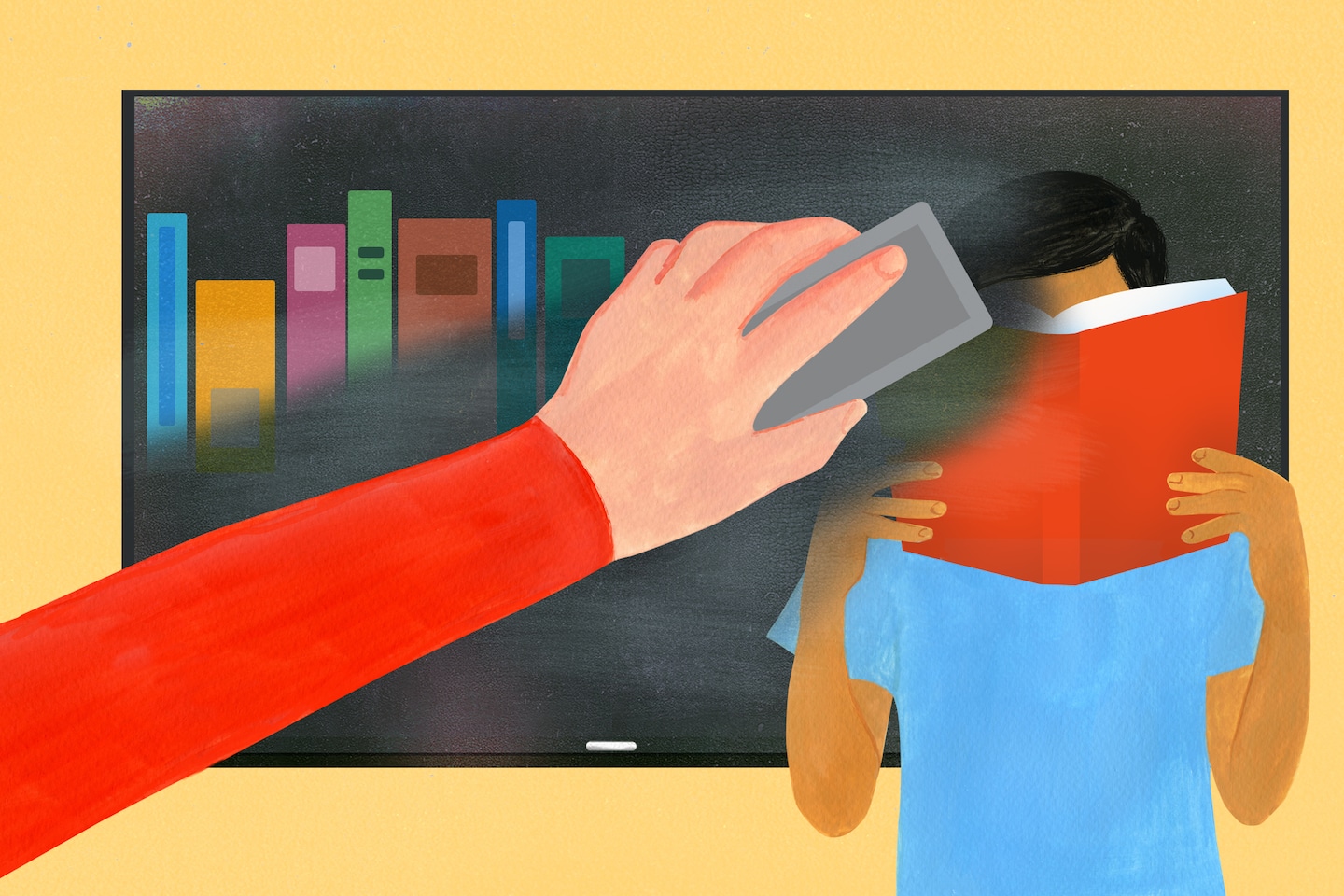
I grew up in Rockingham County. This is where I went to elementary school and middle school. My parents now live across the county line, and I sat in their kitchen two weeks after the book removal vote to stream the school board meeting and watched the school board’s actions. We listened to public comments on the matter.
There was no point in removing the books. A grievance process already exists. And even if the board finds the process insufficient or unclear, the new “cancellation first policy,” as one concerned parent called it, is, well, outdated. Parents could have known what their children were checking if they wanted. No one used existing complaints procedures to challenge the books on the list, and some books were not even in school libraries.
This is a strange list. It’s a patchwork of Advanced Placement-inspired classics, young adult romance, and long-running favorites. Some are light, some are heavy. Themes include sex, drugs, poverty, police brutality, slavery, sexual abuse, bullying, suicide, and more. More than a third of the books feature transgender or queer characters. It’s hard to see what really connects “All American Boys,” “Heartstopper” and “Slaughterhouse-Five” other than one key characteristic.
Books on the banned list, by definition, express feelings, experiences, and political views that the dominant culture would like to pretend do not exist.
But they do exist, and they exist not only outside each community, but also inside them.
Since moving to Virginia, my parents, both Democrats, have lived in a predominantly Republican community and synagogue membership in a landscape dotted with churches.
Blue dots of urban areas are floating in a sea of red in rural areas across the country. we know that. Zoom in on these blue cities and you’ll find red enclaves like Beverly Hills in Los Angeles County and Staten Island in New York City. We know that too.
But people sometimes forget that if you expand into farmland or suburbia, you’ll find blue houses all over the place. Or maybe you’re a blue voter living in a red house.
This is something I’ll never forget – when stunned Trump-era Democrats joked that the South should secede, or when progressives proposed a travel ban on red states. I can’t.
A non-believer living in a Muslim household in a Christian neighborhood. A gay child born into a family that believes homosexuality is a sin. Every home has children who have thoughts, feelings, and experiences that are not polite to talk about.
During the public comment session at the school board meeting after the books were removed, some people passionately opposed the school board’s actions. One person said that taking away these books meant “forbidding life-changing experiences that would allow us to see each other more clearly.” Another commented for students facing difficulties: “I want you to know you are not alone.”
But those who spoke in defense of the book’s removal essentially said, “That’s just the way it is.”
“Rockingham County is overwhelmingly conservative, whether we like it or not,” one resident said. “Elections have consequences, and it is better for the community to be represented as such than to be dictated to by those who do not share the values, views, and morals of other members of the community.”
The freedom to read is the closest thing to the freedom to think. No matter how skewed the numbers are – whether it’s 4 to 1 or 40 to 1 – the majority has no right to take away that freedom.
Yes, that’s true, as some commenters claimed. The removed books are still in print and on the shelves of public libraries. But that’s like saying art instruction can be taken outside of school. Or math help. This assumes that children can receive external education. Public schools promise everyone the right to learn, grow, and think, regardless of their circumstances. That’s a promise we must try to keep, even if, as parents, we worry that our children will think differently than we do.
Afterwards, another resident told the school board’s only opponent: “Please join your parents, grandparents and other school board members.”
“Get on.” There is no room for dissenting opinions and no free thought is tolerated. Majority rule rules your mind.
After the board meeting, I went back to my parents’ kitchen table to prepare a talk I was giving the next day at the local library about my book about being an atheist. This book is essentially a printed version of the verbal discrediting that I’ve been doing for years. I say things I used to not say, but I do so now with more confidence because I know I am not alone as a non-believer. .
How can we know, since people tend to be silent about their atheism, about the differences between themselves and their neighbors? I know from statistics, conversations and extrapolated my own experience.