

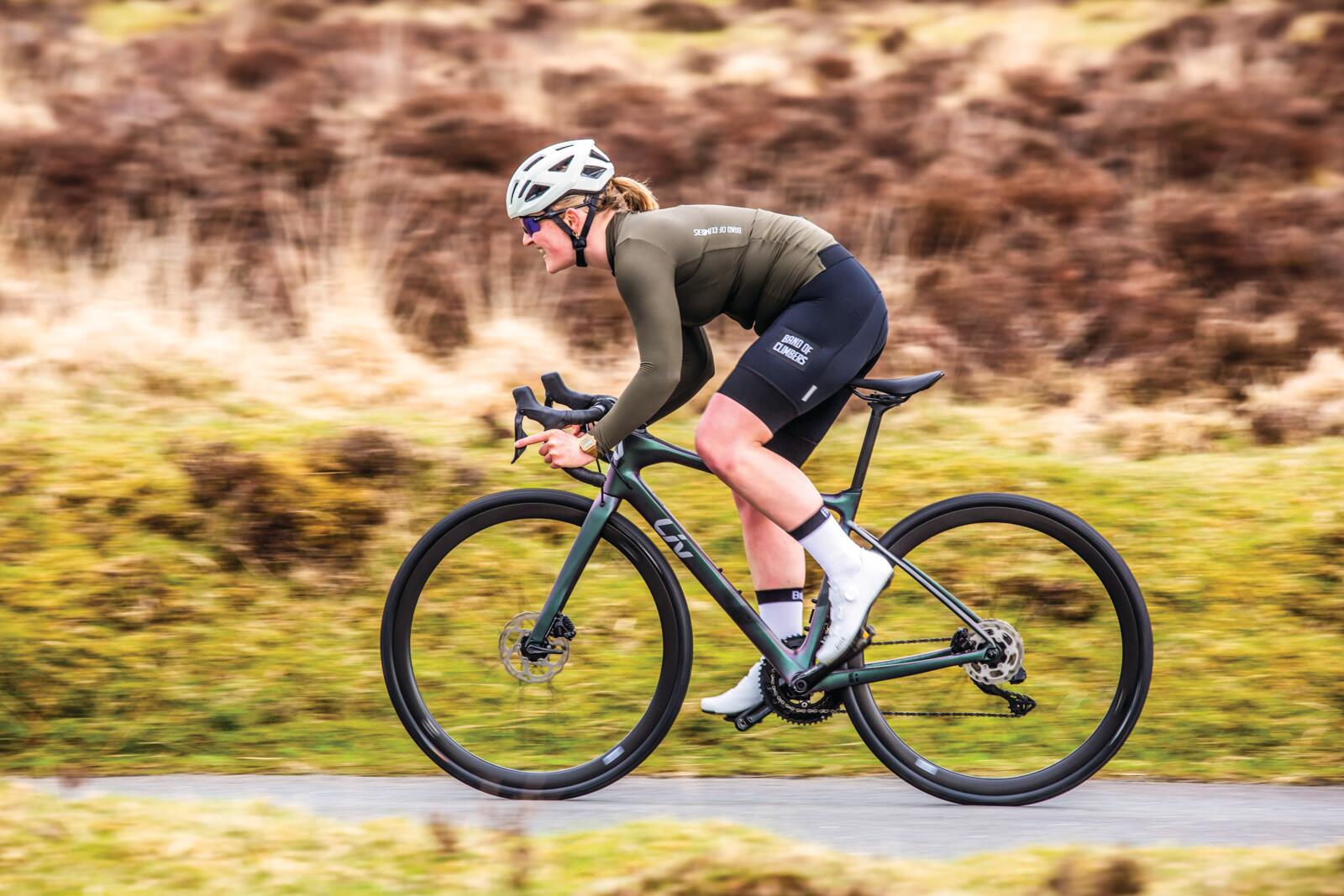
Almost every cyclist needs a break from riding at some point.
There are many reasons why you’re likely to take some time off from your bike at some point, from intentional “off-season breaks” to illness, injury, family, work, and social commitments.
When you have to stop riding, whether it’s a forced break or simply breaking out of a habit, a common concern is that your hard-earned fitness will disappear in an instant, and when you’re done riding. It may take forever for me to feel strong again. To regain some consistency.
So, how quickly does your physical strength decrease? And how quickly can you get it back?
Here we take a look at what happens to your body and fitness as a result of a riding break, and what you can do to efficiently recover or minimize the loss of fitness in such situations.
Understand the stages of detraining

Stage 1: 1-14 days
During the first 14 days off the bike, “detraining” is usually very minimal and you get back on track quickly.
This detraining is primarily a result of a decrease in blood volume, or the total amount of blood in the body. This phenomenon can be seen as soon as he leaves the bike for a couple of days. Decreased blood volume is the result of a decrease in both plasma volume (the amount of fluid in the blood) and red blood cell volume (the number of blood cells that carry oxygen).
There are two important effects of decreased blood volume. First, the blood’s ability to carry oxygen to working muscles is reduced. Second, the heart does not fill with blood effectively between beats, so less blood is pumped out of the heart with each beat.
Taken together, these factors mean less oxygen is delivered to working muscles, lowering your VO2 max (the maximum rate at which your body takes in and processes oxygen to create energy).
Being off the bike for 6-10 days will also affect your muscles. This includes changes in the transporters and enzymes responsible for moving fuel to the muscles and processing it to produce energy.
Studies have shown that these changes can reduce the ability of muscles to utilize oxygen to generate energy by as much as 50% in well-trained cyclists. However, it should be noted that this is an extreme example, and for the average recreational cyclist, the reduction would be even smaller.
In fact, you may notice that your heart rate is approximately 5-10% higher for a given power output. This is a compensatory mechanism to compensate for the fact that less oxygen is delivered to the muscles with each heartbeat.
You may also not be able to push as hard as you used to, especially for efforts that last between 3 and 20 minutes, which are highly dependent on your VO2 max.
You may also need to eat a little more to avoid shock on long rides, as your muscle glycogen stores may be reduced and your perception of effort and blood lactate levels may also be a little higher.
Stage 2: 2-4 weeks
Unlike the first 14 days, when the effects of detraining are very minor and easily reversible, 2-4 weeks is when more significant detraining begins.
Throughout this period, we begin to see major structural changes in our bodies. For example, the thickness of the heart’s left ventricle may begin to decrease, further limiting the amount of blood that the heart can pump with each stroke.
This is most noticeable for 2-3 weeks and then stabilizes. This change in the size of the heart muscle (along with the changes that occur during stage 1) reduces VO2 max by about 4 to 14 percent in very healthy cyclists and about 3 to 6 percent in less healthy cyclists. To do. trained cyclist.
There is also a decrease in capillary density at about 2-3 weeks. Capillaries around muscles are important for ensuring efficient diffusion of oxygen from blood to muscles and are another factor that influences VO2 max and threshold power (such as functional threshold power or FTP) is.
Your endurance may also begin to decline. According to one study, the time to exhaustion can be reduced by up to 25 percent, but this seems to be a fairly extreme example, and other studies suggest that the time to exhaustion may be reduced by less than 5-10 percent. A decrease has been observed. Initial fitness level is a key factor in determining how much cycling endurance is lost, with fitter athletes losing more endurance.
Overall, you will notice a significant drop in fitness throughout this period. Punching power, endurance, and threshold power all take a hit, as structural changes in muscle size and capillary density, as well as the more temporary changes seen in phase 1, need to be reversed. It will take more time to restore.
You can see that the heart rate response is slow. After intense exercise, it takes a while for your heart rate to come down, and increasing the intensity may cause your heart rate to rise more slowly, and at a given wattage your breathing rate will increase.
Stage 3: 4 weeks
If you are away from your bike for more than 4 weeks, Many of the detraining adaptations seen in stages 1 and 2 continue until stabilization.
For example, enzyme activity can decrease by 25 to 40 percent after 4 to 12 weeks of rest, but then generally remains slightly elevated above pre-training levels. Depending on your initial training condition, your VO2 max can drop by 6-20%.
Research suggests that strength adaptations can be maintained for up to 12 weeks with minimal training, although strength, which had been relatively stable up to this point, will likely begin to decline throughout this period.
Changes also occur in the composition of muscle fibers. For endurance cyclists, this means a reduction in the aerobic efficiency of type I fibers (also known as ‘slow-twitch’ fibers) and a shift towards more anaerobic ‘type II’ fibers (also known as ‘fast-twitch’ fibers). . Since cycling is primarily an aerobic sport, this severely impairs your broad cycling ability.
The case study of Olympic rowers nicely illustrates the collective impact of an eight-week break in training. At its peak, rowers were able to produce 399 W at a lactate level of 2 mmol. This is the wattage that a rower can sustain for hours at a time. After 8 weeks of inactivity, this wattage decreased by more than 100 W, or about 25 percent.
But again, the elite level physical fitness of the rowers would provide a higher ceiling.
How long will it take to feel well again?
Now, let’s move on to the hot question.
How long does it take to get my fitness back to pre-break levels after I step off the bike?
Unfortunately, there is little data available to give an accurate answer to this, and it really varies greatly from person to person.
Unfortunately, retraining always takes longer than stopping training. So, for example, it takes him more than two weeks to regain the strength he lost during a two-week training break. This is why training consistency is so important and perhaps the biggest determinant of continued fitness progress.
If you only take a week or two off, you can return to your previous fitness level within about two to four weeks. Longer vacations usually require more time to regain strength.
In the aforementioned case study of Olympic rowers, it took eight weeks of training to regain approximately 50 percent of the strength lost after an eight-week training break.
When you regain fitness, you usually start out with fairly rapid gains, then gradually taper off as you approach your previous fitness level.
Retraining also highly depends on your training history and previous fitness level. From coaching and personal experience at High North His Performance, we know that riders with a longer training history (e.g., have been training relatively consistently for 5+ years) regain fitness faster than riders with a shorter training history. I found out that it is possible. Training history.
In a sense, the body “remembers” how to adapt to training, and the longer an athlete’s past training history, the more effectively they will be able to adapt.

How to minimize fitness loss
If you need a break from riding but can fit a little training into your schedule, is there anything you can do to minimize the loss of fitness?
Again, there isn’t much research in this area, so it’s hard to say for sure. However, one fairly comprehensive study found that fitness is best maintained by either:
- Reduce the length of training sessions. For example, instead of riding 2 hours each 5 days a week, he can ride for 1 hour 5 days a week, keeping the intensity of the sessions the same as before.
- Reduce the frequency of training sessions. For example, instead of riding 5 days a week for 2 hours each, you can ride 3 days a week for 2 hours each while keeping the intensity distribution the same as before.
This study found that reducing the length of training sessions by just one third was enough to maintain maximum VO2 and endurance. Reducing training frequency from 6 times per week to 2 times per week was also sufficient to maintain at least high-end fitness characteristics (the effect on long-term endurance was not tested).
Reducing training intensity to reduce riding does not seem to maintain fitness very effectively. Therefore, it is important to incorporate more high-intensity training if you want to minimize loss of fitness.
If you’re injured and can’t ride your bike, you may be wondering about the benefits of cross-training (participating in other sports like running or swimming).
Cross-training can help reduce the effects of detraining, but it can’t fully compensate for time off the bike because it uses different muscles and develops them in a different way.
If possible, try to choose aerobic cross-training that gets your heart rate up in a similar way to cycling. This helps maintain cardiac output and blood volume even when muscle training is somewhat reduced. Running, aqua jogging, rowing, or using a step machine or cross trainer at the gym are good options.

Do not panic
Periods of training downtime are inevitable for cyclists, and fitness progress is rarely linear. If you are off the bike for a short period of time (up to 2 weeks), if it doesn’t happen too often, there is little long-term effect on your fitness and you can regain fitness within a few weeks.
In this situation, there is no need to worry if you are trying to take a short break from training. It helps you take a mental break from riding and restore your motivation.
The longer the period away from training, the more pronounced the effects on fitness, with high-intensity ability being the first to develop, followed by endurance and then strength. Athletes with higher fitness levels and longer training histories experience greater fitness declines, but are also generally able to reverse these changes more quickly.
If you expect to be out of work for an extended period of time, consider whether there is anything you can do to maintain your fitness, such as riding less or incorporating cross-training. Completing one or two high-intensity sessions each week will go a long way in maintaining your fitness.